
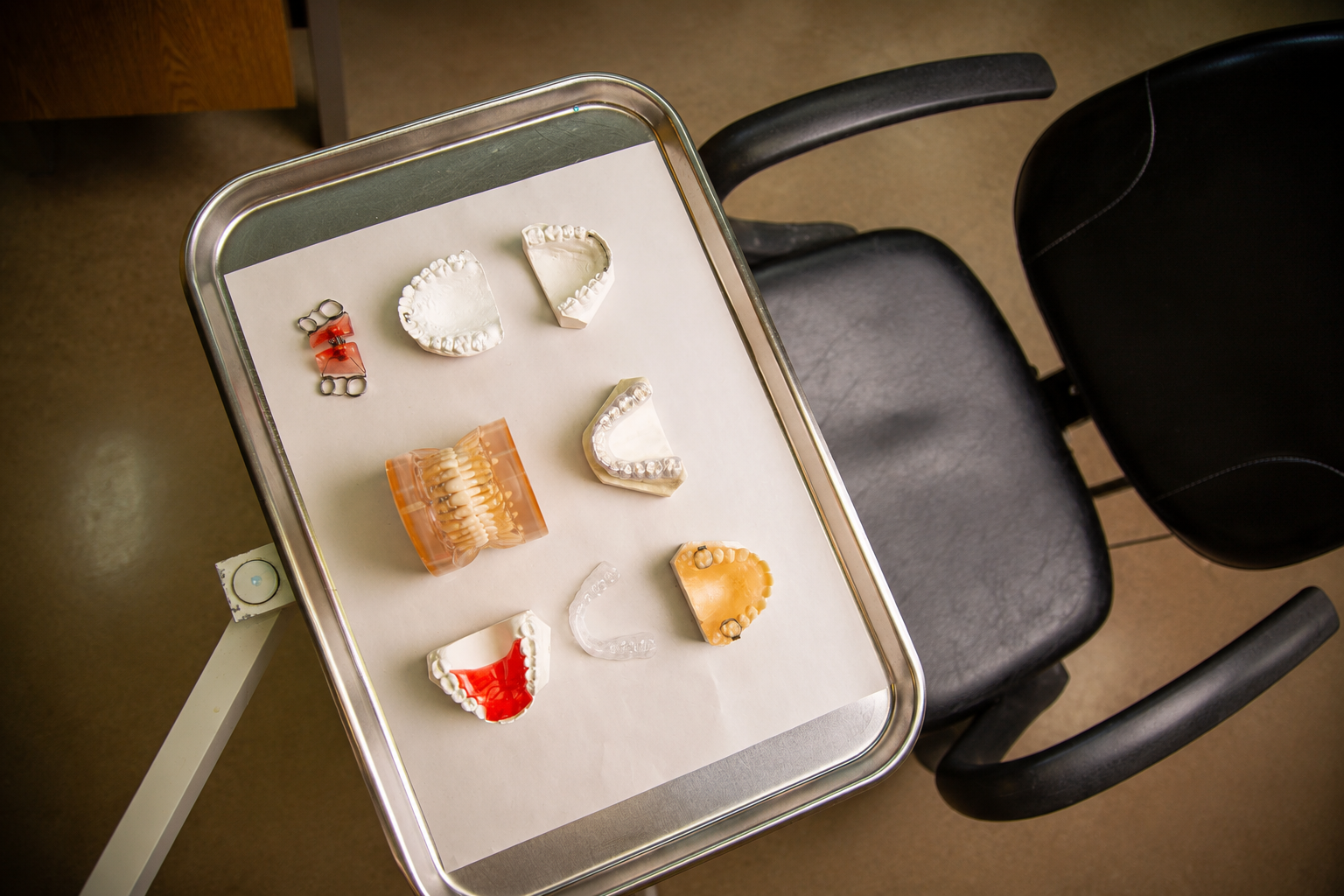
The Expander That Carries Our Name
When orthodontists around the country order a Haas expander for their patients, they’re prescribing an appliance that’s been a cornerstone of the field for over seventy years. It’s taught in dental schools, cited in published research, and used in practices from Ohio to Oregon.
Most of those orthodontists have no particular connection to the name on the appliance.
We do.
The Haas palatal expander was developed by Dr. Andrew J. Haas, whose landmark 1961 paper established the clinical case for what is now the most widely used fixed expander in orthodontics. Dr. Andrew Haas is part of our family. The practice you’re sitting in, the doctors treating your child, and the appliance that may be part of their treatment plan all come from the same lineage.
We don’t lead with this to impress anyone. We lead with it because it explains something about how we think — and why expansion here means something different than it does at a practice that simply orders the appliance from a catalog.
“That Sounds Like My Kid”
Most parents come in focused on the teeth. Crowding, overlapping, a smile that looks like there isn’t quite enough room for everything. That’s usually what they can see. What’s harder to see is the structure underneath — and that structure is often the more important story.
Here’s what parents frequently describe before they understand what’s actually going on:
Their child sleeps with their mouth slightly open. They snore occasionally, or more than occasionally. They seem like a restless sleeper. Some have been flagged for attention or focus issues at school. Teachers mention distraction. Parents chalk it up to personality or age.
In a meaningful number of these cases, there’s a structural explanation. When the upper jaw is narrow or underdeveloped, the airway is affected — because the roof of the mouth is also the floor of the nasal passage. A narrow palate can mean a narrower airway, which means the body works harder to breathe at night, which means sleep that doesn’t fully restore. A child who isn’t sleeping well doesn’t focus well. It’s not a personality issue. It’s a plumbing issue.
This connection — between jaw structure and breathing, between breathing and sleep, between sleep and how a kid functions during the day — is where most orthodontic conversations stop short. It’s not something an expander always fixes, and we won’t tell you it will. But it’s something worth looking at before you assume the problem is somewhere else.
What the Expander Actually Does — In Plain Terms
In children and adolescents, the upper jaw isn’t one solid bone. It’s two bones joined down the middle by a seam — called a suture — that stays flexible during the growth years. Think of it like the seam on a piece of fruit that hasn’t fully set yet. Gentle, consistent pressure applied to that seam causes it to slowly widen, and new bone fills in behind it.
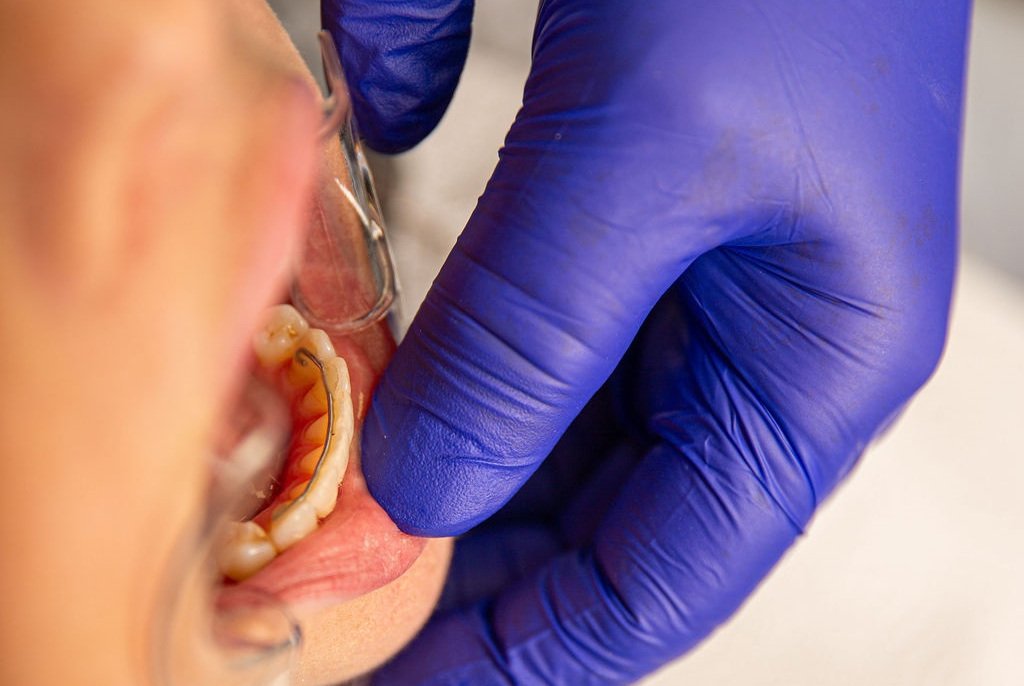
That’s what the Haas expander does. It’s cemented to the upper molars and uses a small screw in the center — turned by a parent with a key, usually once a day — to apply that steady pressure. Over weeks, the jaw widens. The bone responds. The result isn’t just a wider smile; it’s a wider foundation.
More arch space means crowded teeth often have room to come in on their own, without being forced into position or extracted to make room. A wider palate means more room for the tongue to rest where it belongs. And because the palate forms the floor of the nasal cavity, expansion also opens the nasal airway — which is where the breathing benefits come from.
The appliance stays in place for several months after the active expansion phase, giving the new bone time to mature and stabilize. Most kids adapt within a week or two. There’s some pressure and mild discomfort when the screw is turned, typically for an hour or so afterward. It affects speech briefly at the start. By and large, children handle it far better than parents expect.
Why the Original Design Is Still the Standard
There are several expander designs in use today. The Haas-type remains the one against which others are compared — not out of nostalgia, but because seventy-plus years of clinical evidence supports it. We use it because it works, because the outcomes are predictable, and because we have a longer relationship with this appliance than anyone else in the field. When Dr. Andrew Haas spent years refining the design, he wasn’t working in the abstract. That work became the foundation this practice is built on.
The Window That Closes — And What Parents Most Need to Know
This is the part we want every parent to hear clearly, because it’s the thing that most affects what we can do for your child.
The suture that makes expansion possible doesn’t stay flexible forever. It begins fusing during adolescence — the timing varies, but it’s typically somewhere in the mid-to-late teens. Before that point, the expander is doing something genuinely structural: the bones move, new tissue forms, the change is real and lasting. After that point, achieving the same result requires surgery. Same outcome, very different path to get there.
Most parents who come in asking about expansion are still inside the window. But we see families regularly who learned about this option later than they should have — whose child’s dentist mentioned it at eleven, who waited to see what happened at twelve, who are now sitting across from us at fifteen wondering what’s still possible.
We’re not in the business of manufacturing urgency. Some kids genuinely don’t need intervention, and we’ll tell you that plainly if it’s true. But we do believe that parents deserve a clear picture of what’s available now versus what becomes more complicated later. That picture changes with your child’s age, and the difference can be significant.
What tends to prompt a first visit: crowded or overlapping teeth, a narrow smile, a child who breathes through their mouth, snoring, or a dentist who mentioned the jaw looks narrow. If any of those apply, an evaluation makes sense — not because treatment is certain, but because knowing where your child stands costs nothing and the information is genuinely useful.
A Consultation Isn’t a Commitment
We’ll walk you through what we see, what it means structurally, and what we’d recommend — with honest reasoning, not a sales pitch. If there’s nothing that needs addressing right now, we’ll tell you that too, and we’ll tell you when to check back in.
That’s been the approach in this family for a long time. Call any of our two offices or request a consultation online.
Stow: 330.688.8667
Green: 330.644.1033